


Life Outdoor Living
The perfect synergy between the online environment and physical stores. 40% growth in revenue.
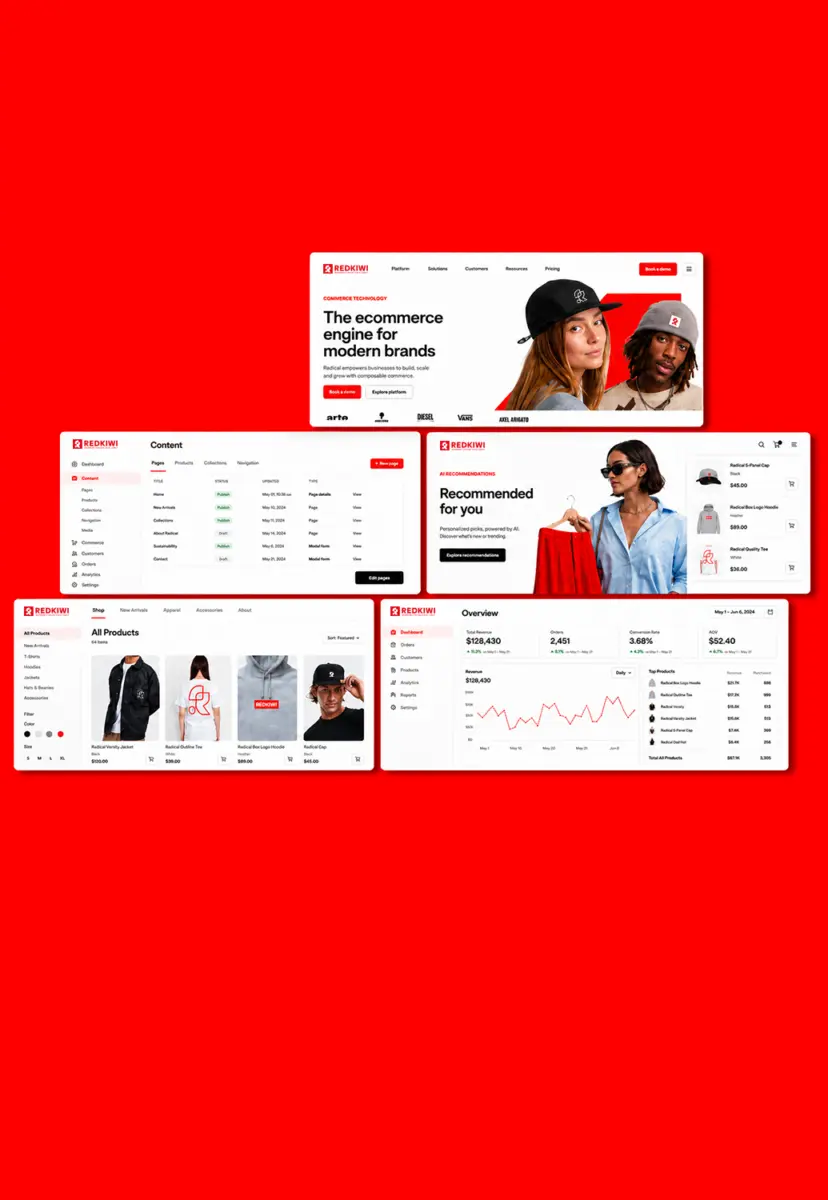
Three situations we encounter daily with growing online stores.
Every change on the store side affects your platform, so a developer stands between you and a banner. With a separate front end, your marketing team manages the content, and the commerce engine remains untouched.
Two brands or three countries now mean three separate online stores, each requiring its own maintenance. A single backend with multiple frontends eliminates that duplicate work, and your product data is stored in just one place.
Your content is locked into your online store, so the same text and images also appear in your app and on your landing pages. With content from a single source, you can serve every channel without having to copy it.
Headless commerce means that the layer your visitor sees is separate from the system that manages your orders, prices, and inventory. They communicate with each other via an API. This allows you to revamp your website or launch a second brand without touching your commerce engine.
That freedom is real, and it doesn’t come for free. You’ll need to maintain two layers instead of one, and your platform’s standard features may sometimes require extra work. It pays off when you have multiple brands or operate in multiple countries, when you frequently update your front end, or when content and commerce are managed by different teams. If you have a single online store with a single target audience, we’d say it probably won’t be worth it for you.
You’ll be working with Paul van der Meijs, Head of Engineering at Redkiwi, along with Tim Sol and Jasper. We’ve been building online stores since 2004, and those 22 years of customer insight are the foundation of every piece of advice we give.
Four layers. The trade-off: whether separating these layers will benefit your situation, and what the maintenance costs will be. The front end: the layer your visitors see, built to remain fast and update frequently. Content management: a single source for text and images that powers your online store, your app, and your landing pages. And the integrations: prices, inventory, orders, and customers that flow between the two layers, with a single source system for each piece of data.
A headless project rarely fails due to technical issues; it often fails because of management challenges. That’s why we define upfront who makes which changes: which modifications your marketing team handles directly in the content system, and which require a developer. Then we build in phases: first, we go live with one front end featuring the integrations you need, followed by the second brand or the next country. This way, you can see whether the flexibility is actually being utilized before you roll it out across your entire platform.
Three services that enable a decoupled frontend.
Decoupling a frontend only works if your integrations are correct and your content and product data come from a single source. Otherwise, you’re just shifting the management problem instead of solving it.
From evaluation to expansion in five steps.
We assess whether the separation will benefit you. If the answer is no, we’ll tell you so and look for a less invasive solution.
For each piece of data, we document which system is the source and who can make which changes. This prevents most future frustrations.
The layer that your visitors see, built to remain lightweight and to be populated by your own team.
Prices, inventory, orders, and customer data flow between both layers, with monitoring in place so you’ll know when an integration fails.
Once the first front end is up and running, the next brand or country can be added. This way, you only pay for the flexibility once you actually use it.
Three organizations for which we set up separate frontends and content management systems.
Independent advice, no bias.

Headless content with an editor that empowers your editorial team to publish


A content model that fits your organization, rather than a template


A React framework for building SEO-friendly and interactive web apps


Business applications that will still be maintainable in five years


A PHP framework that creates stylish and low-maintenance web applications.

In one hour, we’ll review your brands, your markets, and your content management, and let you know whether a headless approach is worth it for you—even if the answer is no. It takes just one hour and doesn’t commit you to anything.

More than just an integrated platform, because you’re building and maintaining two layers instead of one. The final cost in your case depends on the number of front ends, your integrations, and how much you want to be able to manage yourself.
What you always get: a fair assessment before anyone starts building, a clear definition of who can make which changes on their own, phased development so you only pay for the flexibility you actually use, and a recommendation for a lighter solution if that’s sufficient.
Want to know if this works for you? Schedule a meeting, and we’ll work through the details together.