

MAX'S
Easy going

Three situations we encounter every week.
If a customer sees no reason to choose you, they’ll choose based on price. That’s the most expensive spot in any market. A clear strategy provides that reason, so you no longer have to be the cheapest.
Quality, service, and personal contact are mentioned on every website in your industry. That doesn’t set you apart. We look for what you can claim that your competitors can’t, and that’s rarely the first thing mentioned internally.
Sales tells a different story than the website, and marketing tells yet another. That undermines brand recognition with every communication. A single, defined strategy turns three stories into one.
Knowing who you are as a brand is one thing. The question is whether your target audience knows that too—and whether it matters to them. Brand strategy is the choice of which place you want to occupy in their minds: what you stand for, for whom, and why that’s a better fit for them than the alternative.
We base that choice on research rather than personal preference. We look at what your competitors are claiming, what your target audience cares about, and which promise you can actually deliver on. We apply insights from behavioral psychology in a practical way: people make choices based on gut feeling and then justify them afterward with arguments, so your strategy must deliver both.
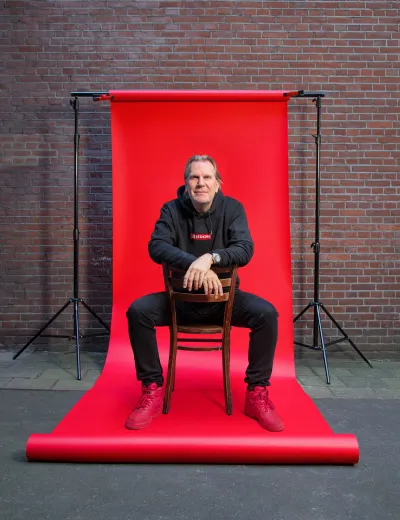
You’ll work with Steven, Head of Seduction. He’ll build the brand strategy together with you and your team, and deliver a strategy that you can articulate without needing a document to refer to. If a claim doesn’t work in practice, we’ll adjust it rather than defend it.
Four layers. The market landscape: what your competitors are claiming, what space is still available, and which terms are already taken. The target audience: who makes the decisions, what that person cares about, and what behavior you want to change. The choice: a single strategy with a promise you can deliver on, plus the supporting evidence that makes it credible. And the implementation: brand story, tone of voice, and the core message for each target audience, in a format your team can use immediately for a website, a campaign, or a pitch.
A strategy that remains on paper doesn’t change anything. That’s why we don’t stop at a choice but at the materials needed to communicate that choice: the core message, the supporting points, and the words you do and don’t use. These go directly into your website, your campaigns, and your sales pitches. When defining your strategy, your team is at the table, because you know your brand inside and out, and a strategy that isn’t embraced internally will never reach the market.
Three elements that shape strategy.
Strateggy never stands alone. An audit shows where you stand now, your visual identity makes that choice visible, and campaigns bring it to the market. We handle all three within the same team.
From market analysis to a story that stands the test of time, in five steps.
We map out what your competitors are claiming, which keywords are already taken, and where there’s still room. Without this overview, you risk choosing a strategy that already belongs to someone else.
We investigate who makes the decisions, what that person pays attention to, and what convinces them to take action. Where possible, we conduct interviews, because an assumption about your target audience isn’t the same as insight.
In a session with your team, we’ll choose a single strategy, along with the promise and supporting evidence. Choosing also means leaving some options on the table.
We develop the strategy into a brand story, a tone of voice, and the core message for each target audience. Concrete enough to use tomorrow.
Next, we’ll integrate the stragey into your website, your campaigns, and your sales pitch, and test whether it works in practice. If not, we’ll refine it.
Three projects where the choice made all the difference.
In one hour, we’ll go over your market, your competitors, and your current brand story. You’ll hear where we see an opportunity for a strategy that’s still open. It takes just one hour and doesn’t commit you to anything.

That depends on the number of brands and target audiences, whether customer research is included, and how much groundwork has already been done. A single brand with a clear customer profile is a different process than a portfolio where brands compete with one another.
What you always get: a market overview showing your competitors’ positions, a single stragey choice backed by supporting evidence, and the materials to communicate that choice on your website and in your sales pitches.
Want to know which strategy is still open in your market? Schedule a brand session, and we’ll explore it together.

During a rebranding, merger, launch of a new brand, positioning challenges, or when you realize your story no longer resonates with your target audience.
Brand identity is about who you are; brand positioning is about how you want to be perceived in the market. One feeds into the other.
Certainly not. Clear positioning is essential for scale-ups and small and medium-sized businesses in particular to grow and stand out from the competition.
On average, 4 to 6 weeks. We always tailor the process to your availability and deadlines.
A well-crafted and well-reasoned positioning document that includes your brand promise, brand values, tone of voice, and the story that makes your brand unique.
 5 tips towards a distinctive brand strategy